Garbage Disposal Leaking or Jammed? A Quick Diagnostic Guide
By the Boca Raton 24/7 Plumbing team · September 17, 2026
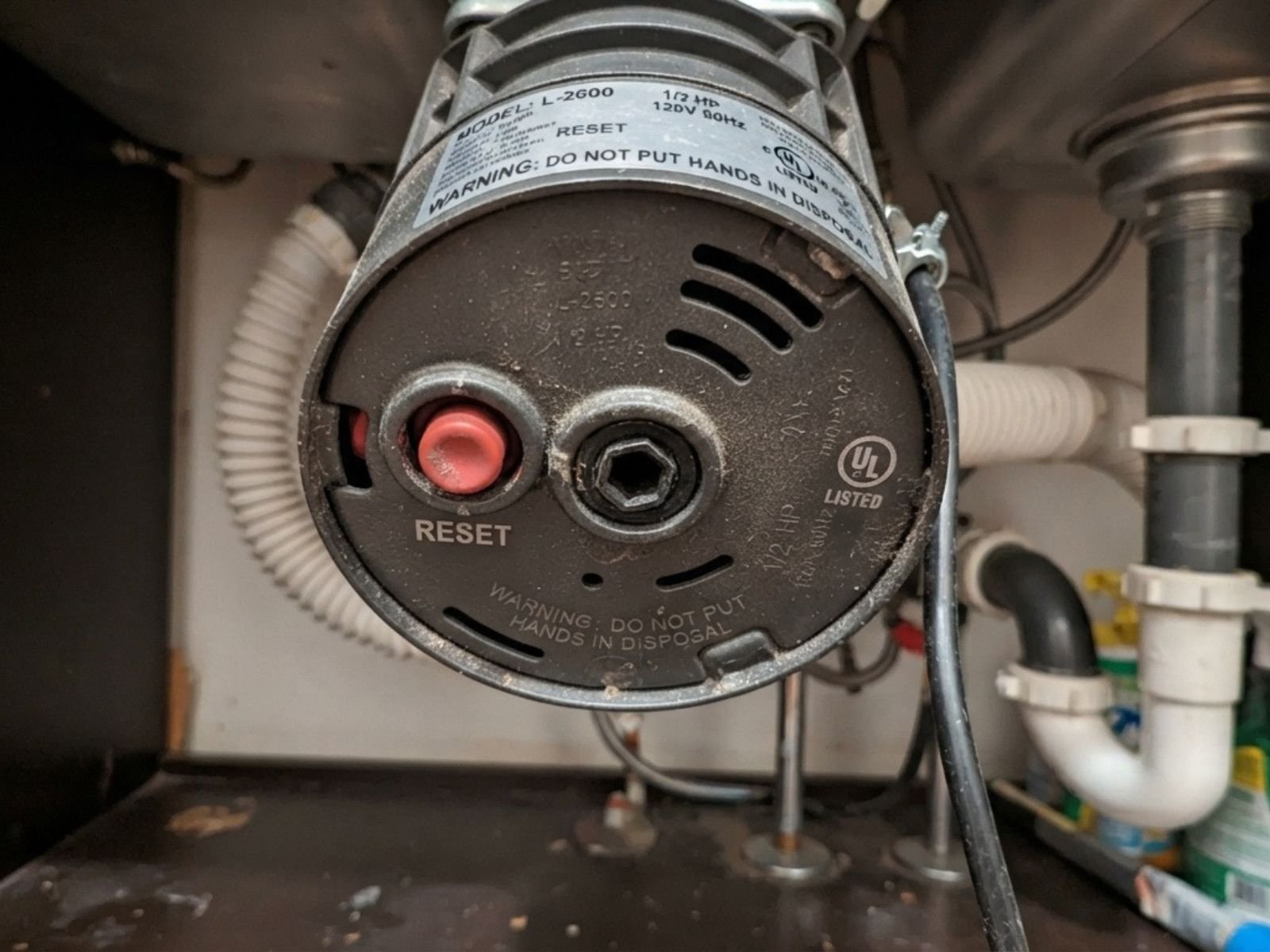
The disposal hums but doesn't spin, or there's water pooling underneath the sink where the unit connects. Both are common, both usually have a specific, identifiable cause, and neither necessarily means you need a new unit. Here's how to work through what's actually going on before you call anyone or reach for a wrench.
Safety first, every time
- • Always turn off power at the wall switch and, ideally, unplug the unit or switch off its breaker before doing anything else.
- • Never put your hand inside the disposal, even when you're confident the power is off.
- • Use a flashlight and, if you need to clear something inside, a pair of long tongs or pliers rather than your fingers.
This isn't overly cautious advice, disposal blades and the flywheel mechanism can cause real injury even when the unit isn't actively running, if power is restored unexpectedly while your hand is inside. Treat every step of clearing a jam as if the unit could start at any moment.
If it hums but won't spin
This almost always means the flywheel is jammed, usually by something that fell in that shouldn't have, a piece of bone, a fruit pit, silverware. Most disposals have a small hex-shaped hole on the bottom of the unit designed for exactly this situation. With power off, an Allen wrench inserted into that hole and turned back and forth can often free the jam manually. Once it turns freely both directions, restore power and try the reset button, usually a small red button on the bottom of the unit, before running it again. Run cold water briefly once it's spinning again to flush out whatever caused the original jam.
If there's no visible hex hole or the jam doesn't clear with this method, that's a reasonable point to stop and call for help rather than forcing something that isn't moving.
If it's leaking, where exactly matters
| Leak location | Likely cause |
|---|---|
| Top of the unit, near the sink flange | Worn seal at the sink mounting, often needs re-sealing or flange replacement |
| Side, at the dishwasher connection | Loose clamp or damaged hose at the dishwasher inlet |
| Bottom of the unit itself | Internal seal failure or a cracked housing, usually not repairable |
| Discharge pipe leading to the drain trap | Loose fitting or worn gasket at the connection |
A leak from the top or a fitting is usually a straightforward repair. A leak from the unit's body itself, meaning the housing has cracked or an internal seal has failed, generally means replacement, since that kind of failure isn't something that gets fixed from the outside.
Why it trips the breaker
A disposal that trips its breaker repeatedly is protecting itself, or the circuit, from an overload condition. This is most commonly caused by a jam forcing the motor to work harder than it should, which is the same root cause as the humming-but-not-spinning symptom, just manifesting differently. If clearing a jam doesn't resolve repeated tripping, the motor itself may be failing, or there could be a wiring issue that needs an electrician's attention rather than a plumber's.
What causes most jams in the first place
Certain foods cause disposal problems far more often than others, and it's worth knowing which ones if you're trying to prevent a repeat jam. Fibrous vegetables like celery and corn husks can wrap around the flywheel rather than getting cut. Starchy foods like pasta and rice expand when they absorb residual water, sometimes forming a paste-like clog rather than a mechanical jam. Grease and fat solidify inside the unit and the drain line beyond it, and coffee grounds, despite being small, compact into a dense sludge over time rather than washing through cleanly. None of these will necessarily jam a disposal every single time, but they're the most common repeat offenders we see.
Odor is a different problem, worth mentioning separately
A disposal that smells bad but otherwise runs fine isn't jammed or leaking, it's usually just accumulated food residue in places a quick rinse doesn't reach. Running cold water for 15-20 seconds after each use, rather than shutting it off the moment grinding stops, flushes residue further down the line instead of leaving it sitting in the unit. Ice cubes run through occasionally can help scrub the interior, and a slice of citrus peel run through afterward genuinely does help with odor, though it doesn't replace actually cleaning the unit periodically.
How to tell if it's actually time for a new one
Most disposals last 10-15 years with normal use. If yours is within that range and showing its first jam or leak, a repair is usually the sensible first step. If it's older, has needed repeated jams cleared, or the leak is coming from the unit body itself, replacement often makes more sense than continuing to patch an aging unit. Florida's plumbing code, based on the International Plumbing Code (IPC), requires a disposal's drain connection to meet the same trap and venting standards as any other kitchen fixture. That's worth confirming if you're replacing a unit that's been in place for many years, since code requirements have sometimes changed since the original installation. Horsepower is also worth reconsidering at replacement time, since household needs can change over the years a unit is in service.
Ready for a repair or replacement?
Our garbage disposal repair and installation page covers sizing considerations if you're upgrading, and most jams and simple leaks are same-visit fixes. If the sink itself is still draining slowly even after the disposal issue is resolved, drain cleaning may be the separate issue worth addressing. This is a steady call across our service area, including Delray Beach's many kitchen remodels where disposal upgrades often happen alongside other updates.
Whatever you're dealing with, describing the symptom clearly when you call, humming without spinning, leaking and from where, tripping the breaker, helps us bring the right approach on the first visit.