Emergency Sump Pump Installation & Repair in Boca Raton, FL
A sump pump that's failed during heavy rain, or one that's never been installed in a home that keeps taking on water in the same low spot, is a 24/7 call, since a failed pump during a storm can mean flooding within hours.
South Florida's high water table and heavy rain
Most Boca Raton homes are slab-on-grade without a basement, but sump pumps still matter here for crawlspaces, low-lying yards, and properties near canals or retention ponds where storm water collects faster than the ground can absorb it. During hurricane season especially, a pump that hasn't been tested in a year is a real risk, not a formality, since South Florida's downpours can drop several inches of rain in under an hour.
Florida's plumbing code, based on the International Plumbing Code (IPC), doesn't mandate a sump pump for every property. It does govern the discharge line's connection once one is installed, though, since that discharge can't simply dump into the sanitary sewer system and instead needs to route to an approved storm drainage point.
Why sump pumps fail when you need them most
Power loss
A standard pump stops working the moment the power goes out, which is exactly when a storm is also dumping the most water.
Stuck float switch
Debris or age can jam the float switch that tells the pump when to turn on, so it never activates even with water present.
Worn-out motor
Pumps have a working life of roughly 7-10 years, and a motor nearing the end of that range is more likely to fail under heavy demand.
A battery backup or water-powered backup system addresses the power-loss failure specifically, which is the single most common reason a sump pump fails during exactly the storm it was installed for.
What to check first
- • If the pump isn't running, check that it's plugged in and the breaker hasn't tripped.
- • Check the float switch for visible debris or obstruction if you can safely access the pit.
- • If water is actively rising, prioritize safety, unplugging electronics in the area, over troubleshooting the pump yourself.
If this is a recurring problem in the same spot every rainy season, it's worth mentioning that pattern on the call. A chronically wet area may need a properly sized pump and pit, rather than a small unit that's been undersized for the actual water volume all along.
What changes the cost
Want your real number? Call (561) 448-8545 and describe your property's flooding history.
Sizing and placement done right
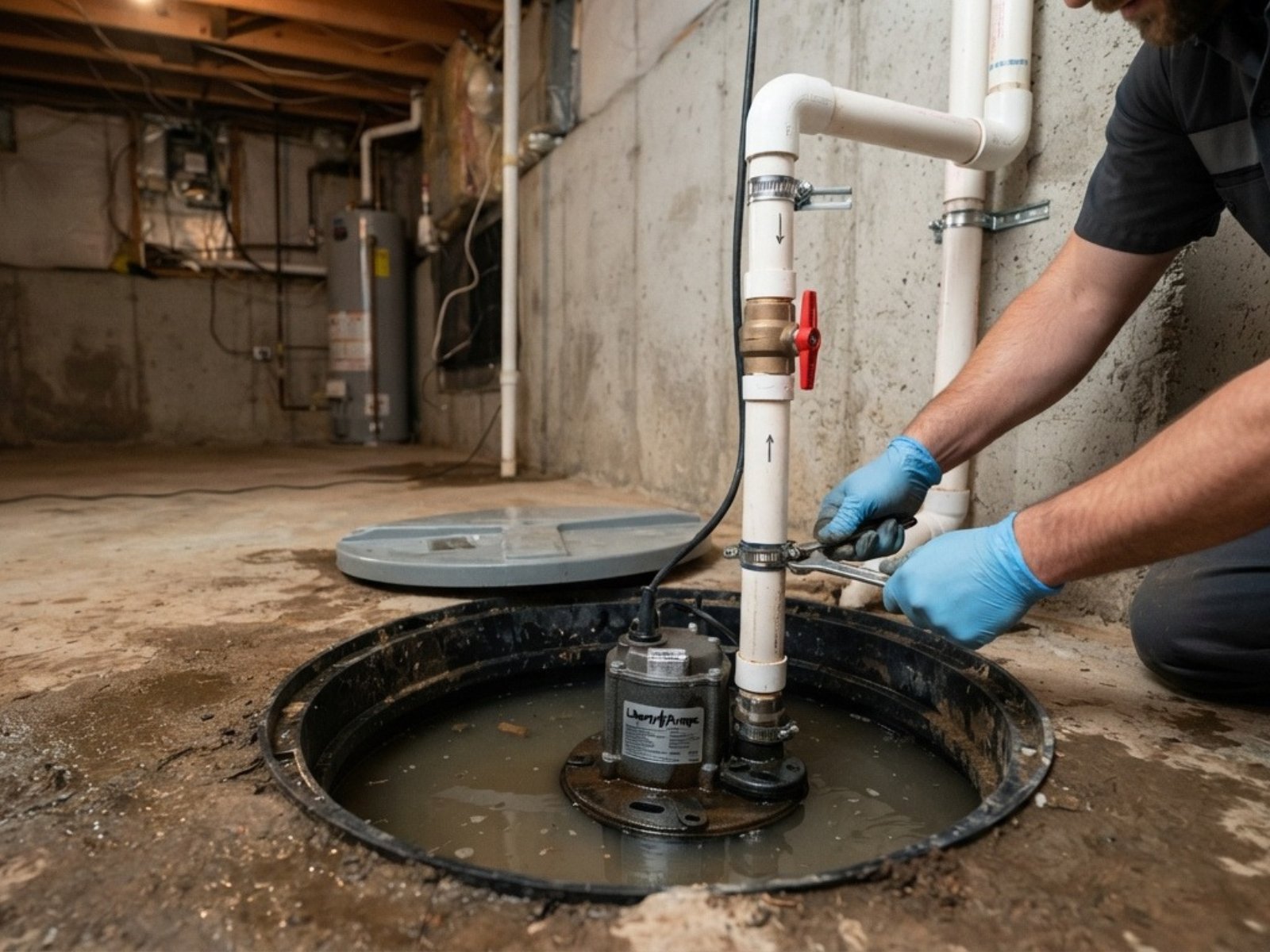
A first-time sump pump installation starts with identifying the actual low point where water collects, not just a convenient spot near an outlet. Pit depth and pump horsepower are matched to the property's real water volume, since an undersized pump running constantly during a storm wears out faster and can still fall behind if the volume exceeds what it's rated for. We also route the discharge line well away from the foundation, so pumped water doesn't just cycle back toward the same problem area.
For an existing pit with a failed pump, we check the pit itself for debris or sediment buildup before assuming the new pump alone will solve the problem. A dirty pit can shorten a brand-new pump's working life just as quickly as it did the old one.
Common questions
Yes, for crawlspaces, low-lying yards, and properties near canals or retention ponds where storm water collects. It's about drainage, not just basement flooding.
At least once a year, ideally before hurricane season starts, by pouring water into the pit and confirming the pump activates and drains it properly.
Generally yes, since power loss during a storm is the single most common reason a sump pump fails exactly when it's needed most.
Roughly 7-10 years with normal use. A pump nearing or past that age is worth proactively replacing before it fails during a storm.
Ready to get this handled before the next storm? Call (561) 448-8545.
If water damage already happened
If a pump failure already led to standing water indoors, water damage restoration handles the cleanup and drying separately from the pump repair itself. Not sure which you need first? Call (561) 448-8545 and we'll sort it out.