Toilet Repair & Installation in Boca Raton, FL
A toilet that runs constantly, rocks when you sit down, or won't stop clogging usually traces back to one of a handful of worn parts, and most of these are same-visit fixes rather than a sign you need a full replacement.
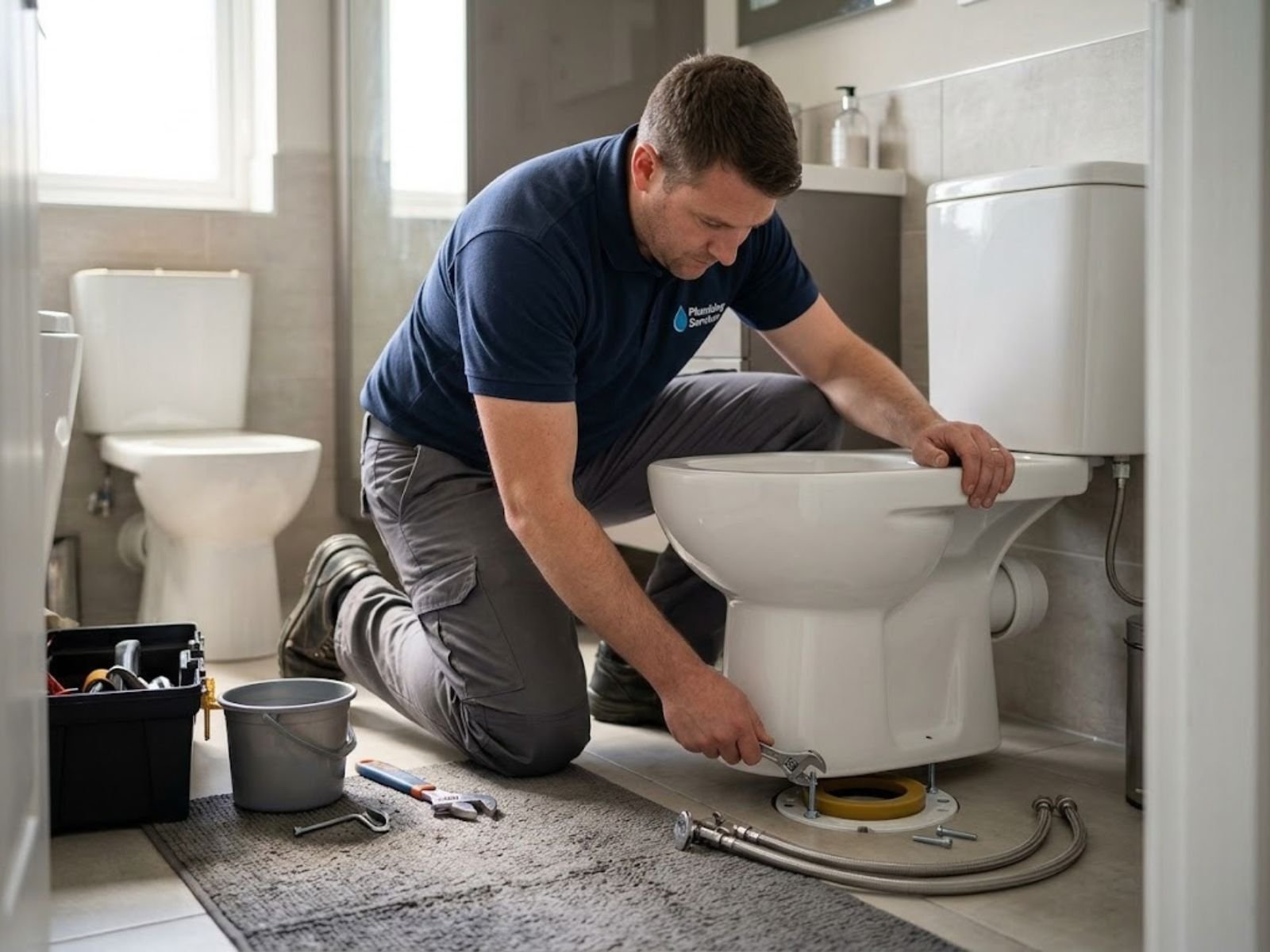
What's usually behind each symptom
Running constantly
Almost always a worn flapper or fill valve that's letting water leak into the bowl between flushes, wasting water and raising the bill.
Rocking or unstable
Usually a worn wax ring or loose closet bolts at the base, which if ignored can let water leak onto the subfloor.
Repeated clogging
Often a partial blockage further down the drain line, or in older toilets, a design that simply doesn't clear waste efficiently.
Florida's plumbing code, based on the International Plumbing Code (IPC), also sets minimum water-efficiency standards for new toilet installations, which is one reason a replacement toilet uses meaningfully less water per flush than one installed decades ago.
A toilet installed before 1994 can use 3.5 to 5 gallons per flush, compared to the 1.28 to 1.6 gallons a modern low-flow model uses. That adds up to a real difference on a household's water bill over a year, especially in a multi-bathroom Boca Raton home.
When a repair is enough, and when it isn't
| Situation | Usual fix |
|---|---|
| Running or slow to stop filling | Flapper or fill valve replacement |
| Rocking base, water at the floor | New wax ring, possibly a subfloor check |
| Cracked tank or bowl | Full toilet replacement, not repairable |
| Old, high-water-use model | Replacement often pays for itself in water savings |
What to check first
- • If it's running, check whether the water level in the tank is above or below the overflow tube.
- • If it rocks, avoid sitting on it forcefully until it's inspected, to limit any further wax ring damage.
- • Note the toilet's approximate age if you know it; older units use significantly more water per flush.
If more than one toilet in the house shows the same symptom at the same time, that's more likely to point toward a shared cause, such as sewer line or venting issue, than a coincidence of multiple fixtures failing separately.
What changes the cost
Want your real number? Call (561) 448-8545 and describe the symptom.
What a proper install actually involves
A toilet installation is more than setting a new bowl on the same footprint. We check the flange height and condition, since a flange that's cracked or sitting too low under new flooring is a common cause of leaks and instability even with a brand-new toilet. A new wax ring or waxless seal is standard on every install, along with checking that the closet bolts are the correct length and properly seated, not just tightened down on whatever was there before.
Flooring changes are a common trigger for this issue: adding tile over an existing floor raises the finished height, which can leave the flange sitting too low relative to the new surface unless it's extended or shimmed correctly during installation. We check for this specifically on any install following a recent flooring project.
If you're remodeling a bathroom and haven't picked a toilet yet, we can talk through bowl shape, height, and flush type options during the estimate rather than you having to research and choose before we even arrive.
Common questions
Not urgent, but worth fixing soon. A running toilet can waste a significant amount of water over weeks even if it isn't overflowing.
Not dangerous, but continuing to use it can worsen a wax ring leak and lead to subfloor damage, so it's worth scheduling a repair promptly.
It depends on your water bill and how old it is. Pre-1994 toilets can use more than double the water of a modern low-flow model.
Yes, including comfort-height, dual-flush, and wall-mounted models, though wall-mounted units need in-wall tank access considered before installation.
Ready to get it fixed? Call (561) 448-8545.
If it's more than the toilet
A toilet that clogs repeatedly alongside other slow drains may point to the sewer line rather than the fixture itself, and general drain cleaning covers most single-fixture clogs. Not sure which applies? Call (561) 448-8545 and describe what you're seeing.