Water Softener Installation & Repair in Boca Raton, FL
Spotty dishes, dry skin after showers, and white scale buildup around faucets and showerheads are the usual signs of hard water, and a properly sized softener or an aging one that's stopped regenerating both fall under this service.
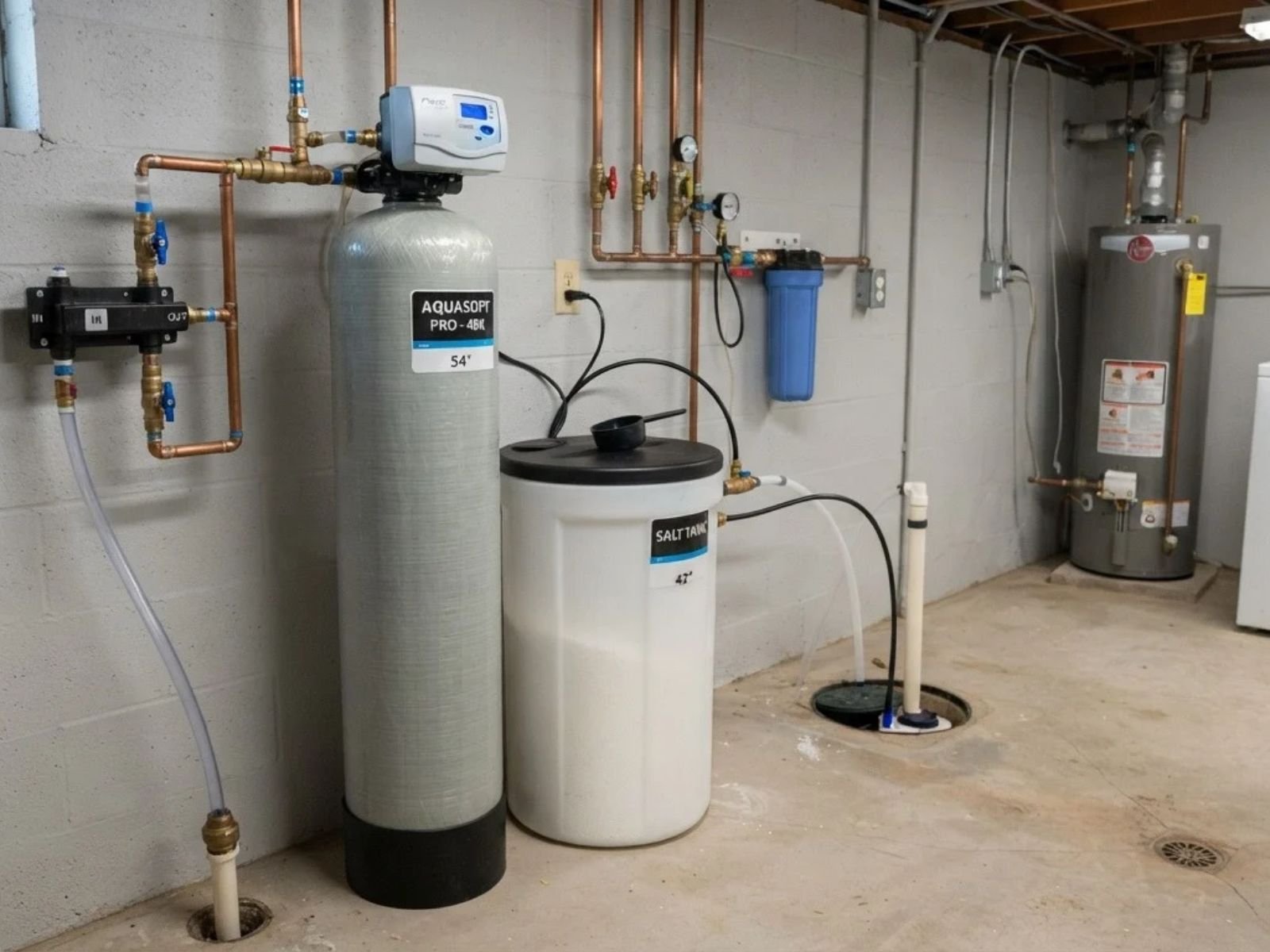
What's really in the water here
South Florida draws much of its municipal water from the Biscayne Aquifer, a limestone formation that naturally dissolves calcium and magnesium into the water supply as it passes through. That makes Boca Raton's tap water moderately hard by most standards, noticeable as scale on fixtures and reduced soap lather, though not as extreme as the very hard well water common in some other parts of the country.
Florida's plumbing code, based on the International Plumbing Code (IPC), doesn't require a softener in any home, but it does govern the drain connection for one once it's installed, since the system periodically discharges brine that needs to route to an approved drain.
Some HOAs in Boca Raton's condo and townhome communities also have their own rules about softener discharge, particularly for units connected to a shared drain stack, which is worth checking with your association before installation rather than after.
A pre-installation water test also lets us confirm whether iron or other minerals beyond calcium and magnesium are present, since a standard softener resin isn't always the right match for every mineral profile. Homes on older galvanized supply lines can also show iron staining that a standard softener won't fully resolve on its own, which is worth flagging during the estimate rather than after installation.
When an aging softener is worth fixing
| Symptom | Usual cause |
|---|---|
| Not regenerating on schedule | Failed timer or control valve, often repairable |
| Salty-tasting water | Overfilled brine tank or valve issue, adjustable |
| No improvement in hardness | Resin bed exhausted; may need resin replacement or a new unit |
| Unit over 10-15 years old | Replacement often more cost-effective than repeated repairs |
What to check first
- • Check the brine tank salt level; a system low on salt won't regenerate properly.
- • Note how old the unit is and whether it's been serviced before.
- • If water tastes salty, mention that specifically, since it points to a different issue than general hardness.
If you're renting or in a condo, check whether a softener is already installed on the unit before assuming you need a new one; some buildings have a shared or building-level system that individual units tap into.
What changes the cost
Want your real number? Call (561) 448-8545 and describe what you're noticing.
Why grain capacity matters more than brand
A softener's grain capacity, how much hardness it can remove before needing to regenerate, should be matched to your household's actual daily water use and your water's specific hardness level, not just picked based on square footage or bedroom count. An undersized system regenerates too frequently and wears out faster; an oversized one wastes salt and water on regeneration cycles that run more often than necessary.
We test your specific water's hardness level as part of the estimate rather than assuming a standard number for the area, since even homes on the same street can see some variation depending on their particular connection to the municipal supply.
Common questions
It's moderately hard due to the limestone aquifer supplying the area. Many residents install softeners for the scale and soap-lather benefits, though it isn't required.
Usually an overfilled brine tank or a valve issue letting excess brine into the treated water; this is adjustable rather than a sign of a defective unit.
Typically 10-15 years, though the resin bed may need replacement sooner depending on water hardness and usage volume.
Softened water has slightly higher sodium content; most people find this negligible, but those on a strict sodium-restricted diet should ask their doctor.
Ready to get this looked at? Call (561) 448-8545.
Considering broader water treatment?
A softener addresses hardness specifically; for taste, odor, or chlorine concerns, a separate whole-home filtration system may be worth discussing at the same visit, since the two systems solve different problems and are sometimes confused for one another. A softener can also extend the life of a tankless water heater by reducing scale buildup. Not sure what you need? Call (561) 448-8545.